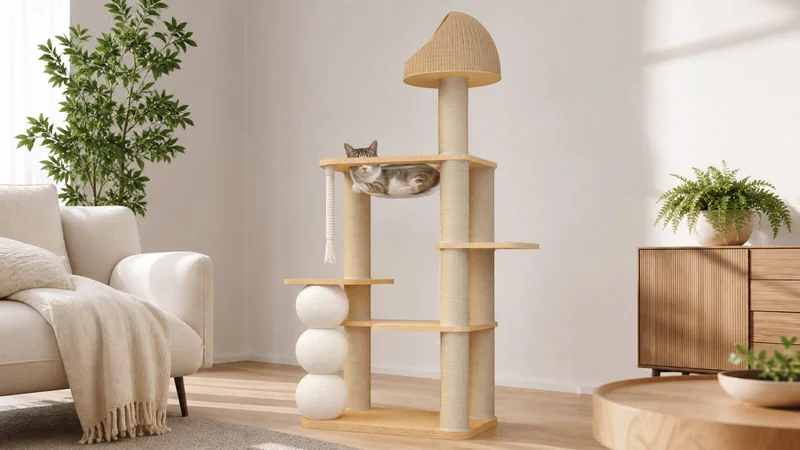
A cat scratching product can look repetitive when every surface is described as another post or another platform. Solid Wood Cat Scratching Post SP-0708-067 takes a different visual route. Its source image combines tall rope-wrapped posts with three rounded rope-textured forms, a clear resting bowl, a small hanging tassel, stepped platforms, and a woven-look conical canopy. These are observable parts of one tall, 170 cm product rather than interchangeable decorations.
For buyers building a texture-led cat-furniture collection, the key task is to keep those details coherent. The product page, sample, image set, packaging diagram, and final order should show the same canopy profile, rounded forms, post locations, bowl position, and platform arrangement. This guide focuses on that product identity and on the points that should be confirmed through the physical sample before commercial claims are made.
Why visible texture needs an exact component story
Texture can give a cat-furniture range a clear point of difference, but only when it is described precisely. In the reference image for SP-0708-067, the three stacked rounded forms make a vertical accent at the lower left. The canopy changes the top silhouette. The clear bowl, tassel, rope-wrapped posts, and natural wood platforms add contrasting surfaces. A buyer can see these elements immediately, so a missing form or different canopy does not look like a minor production variation.
The product should therefore be introduced as a tall scratching tower with a defined texture composition. Avoid claims that the product solves a particular behavioural issue, carries a stated load, or is suitable for every cat. Those conclusions require a documented specification and test method. The source image supports straightforward descriptions of the product's visible structure and surfaces; it does not establish performance claims on its own.
Source record for SP-0708-067
The supplier import record lists SP-0708-067 with a 60 x 40 cm base and 170 cm overall height. It records 18 mm rubberwood board, a 30 x 40 cm capsule field, a 62 x 42 x 45 cm carton, and an approximate gross weight of 28 kg. The post field is entered as “10 sisal mat” in the source spreadsheet, so the exact post diameter, construction, and surface material need clarification on the approved sample and quotation.
| Record item | Imported value | What to verify |
|---|---|---|
| Model number | SP-0708-067 | Use the code across product images, sample labels, drawings, inspection files, and RFQs. |
| Footprint and height | 60 x 40 cm; 170 cm tall | Measure the finished sample and use the confirmed dimensions for listing graphics and placement review. |
| Board field | 18 mm rubberwood board | Check representative thicknesses, edges, surface finish, and the platform outline on the actual unit. |
| Post field | “10 sisal mat” | Clarify the intended measurement, core construction, wrapping material, and application method before approval. |
| Capsule field | 30 x 40 cm | Confirm which round or enclosed component this field refers to and how the final element is attached. |
| Carton field | 62 x 42 x 45 cm | Produces an early volume estimate of about 0.117 m3, subject to final pack-out. |
| Listed gross weight | Approx. 28 kg | Recheck with the completed production sample and export carton before shipping decisions. |
The source material does not state the exact composition of the rounded forms, canopy, clear bowl, tassel, coatings, hardware, order minimum, production lead time, load rating, or target-market testing. Treat those as questions for a sample specification. A realistic image may show the intended appearance, but it cannot replace a component list or verification evidence.
Build a collection story from contrast, not generic adjectives
Terms such as “premium” and “luxury” do not tell a buyer what needs to be retained. SP-0708-067 can instead be presented through contrast: smooth natural-wood platforms beside rope-wrapped vertical forms; three rounded texture-led elements beside the tall posts; a clear bowl below the upper deck; a compact tassel detail; and a woven-look canopy above the structure. The product title can remain direct and traceable, while the body copy explains what a buyer can verify.
This gives a private-label collection a practical content system. One collection page can present a natural wood and rope direction; the product page can identify SP-0708-067 and its component map; a dimension visual can show the 170 cm height and 60 x 40 cm base; and the quotation can tie every requested change to the same model code. The result is more useful than repeating the same front image with different slogans.
Photography should document each texture-led element
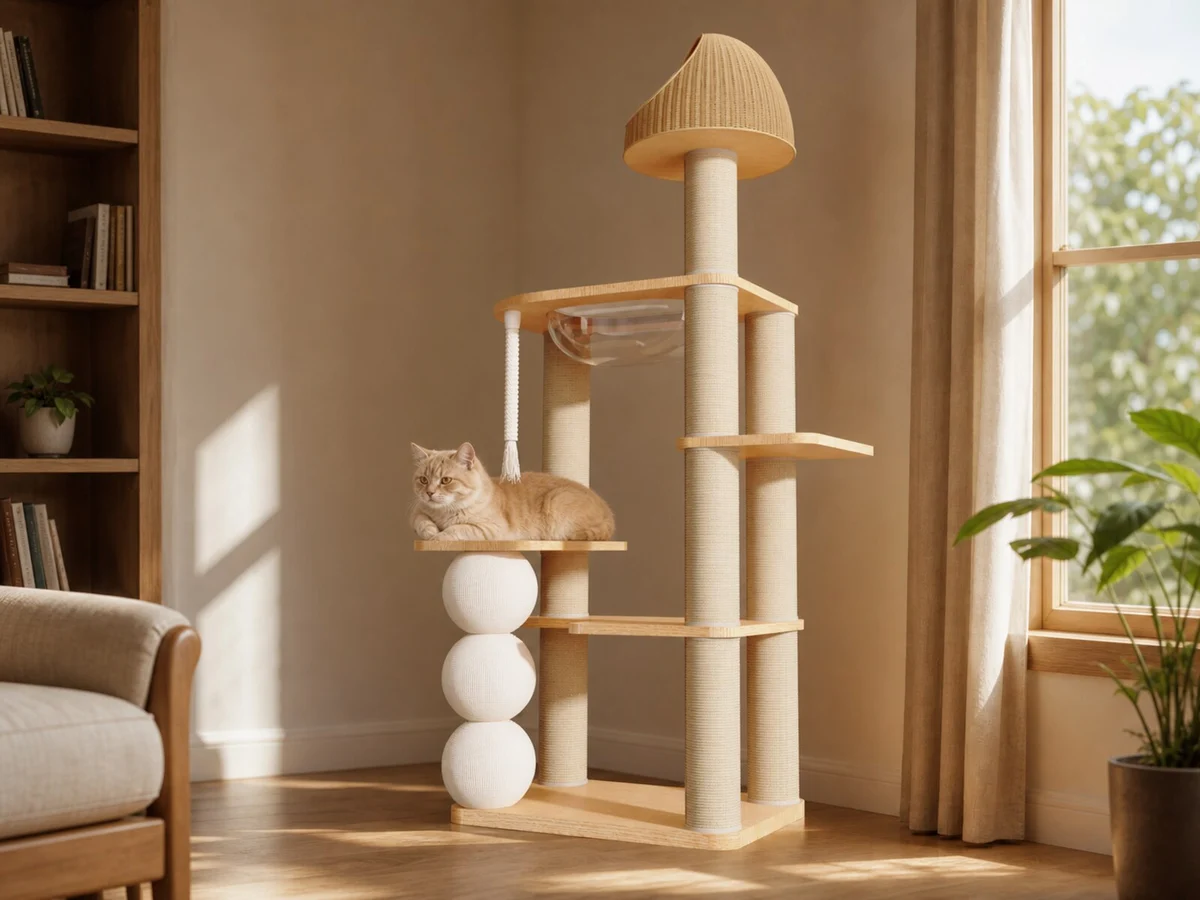
Start with one full-height hero frame that keeps the rectangular base, stacked round forms, posts, bowl, canopy, and platforms in view. Add a second angle that shows the canopy profile, platform depth, right-side step shelf, underside of the bowl support, and relationship between the lower rounded forms and the main post structure. Close-ups should cover the post wrapping, rounded elements, bowl rim and mounting, tassel fixing, canopy surface, board edges, fasteners, base contact, hardware pack, and carton.
Every supporting image should answer one buyer question. The complete shot establishes the silhouette. A close view confirms the canopy and rounded accents. A side view helps identify the bowl support and platform arrangement. The assembly image shows whether the approved components arrive as expected. The carton image connects visual approval with the shipment. This is the right level of detail for an ecommerce content program without claiming details the sample has not yet confirmed.
Sample review: inspect the visual rhythm as well as measurements
Begin with the overall form: the 170 cm height, 60 x 40 cm footprint, base proportions, the lower stack of three rounded forms, post layout, bowl location, canopy position, and right-side shelf. Photograph the sample from front, left, right, rear, and low angles. Place the source image and an annotated component map beside the sample so that any difference is recorded while it can still be corrected.
Then inspect 18 mm board thickness, the still-unresolved post field, wrapping coverage, the finish on the rounded forms, canopy edge treatment, bowl clarity and fixing, tassel attachment, platform contact points, hardware, and floor contact. Keep the reference images, measurement notes, packaging checks, and buyer-specific requirements together in the quality control process. That makes a repeat order easier to review without relying on memory or marketing copy.
Separate finish choices from structural development
Under an OEM or ODM program, a buyer can discuss approved wood tone, rope colour, canopy surface direction, label and logo position, care instructions, carton marks, barcode, and replacement-component codes. These are commercial choices that should be confirmed against the signed-off sample.
Changing the height, footprint, board thickness, post structure, number or size of rounded forms, canopy geometry, bowl mounting, platform layout, or base construction changes the product architecture. It needs revised drawings, a new sample, revised packaging, and appropriate verification. Do not treat these modifications as simple styling requests, because they can change the product's appearance and assembly requirements at the same time.
Plan the carton around the visible components
The recorded 62 x 42 x 45 cm carton is about 0.117 cubic metres before any confirmed packing changes. Freight planning must still use the final outer dimensions, protective materials, packed weight, pallet pattern, destination receiving limits, and carrier rules. The listed 28 kg gross weight should be checked on the final packed sample, particularly if component protection or configuration changes.
Ask for a packing drawing that identifies the base, board panels, posts, rounded forms, canopy, clear bowl, tassel, hardware, instructions, and protection materials. Confirm how the bowl avoids contact with hard edges, how the canopy and rounded elements are protected from compression, how hardware is secured, and which elements are detached. The pack-out needs to preserve the texture-led details that distinguish the model in the first place.
RFQ checklist for SP-0708-067
- Quote SP-0708-067 with target country, expected quantity, channel, and preferred delivery period.
- Document the 60 x 40 cm base, 170 cm height, 18 mm board, 30 x 40 cm capsule field, and the source post field on the physical sample.
- Clarify the post construction and wrapping, then approve the canopy, three rounded forms, clear bowl, tassel, platforms, wood finish, hardware, labels, and care information.
- Request a photo set for the full product, all sides, details, underside, assembly, hardware, and sealed carton.
- Reconcile the actual carton and packed weight with the 62 x 42 x 45 cm and approximate 28 kg source record.
- Set written acceptance standards for dimensions, texture appearance, part placement, packaging, and any buyer-required verification.
- Agree on commercial minimums, prototype timing, production schedule, spare-part process, delivery route, and offer validity before release.
SP-0708-067 is a useful option when a collection needs a tall scratching tower defined by visible material contrast rather than a generic list of cat-tree functions. Its stacked rounded forms, rope-wrapped structure, clear bowl, tassel, platforms, and woven-look canopy give buyers a clear visual reference to protect from sample review through final packing. Review the SP-0708-067 product page, then send the destination, quantity, finish direction, packaging needs, and verification requirements through the inquiry form.